Tumour suppressors are genes that can potentially stop the development of cancer by regulating cell growth, DNA repair and gene stability. They are often turned off by altered chromatin structure and hypermethylation. (1) The lack of control and overexpression of these genes is suspected to contribute to various types of cancer cells.
Brassica (cruciferous) vegetables contain glucosinolates and their breakdown products, isothiocyanates (i.e sulforaphane and indole-3-carbinol), known for their tumour suppression properties. (2) (3) Studies have focused on the potential anti-cancer activities such as protecting cells from DNA damage, inactivating carcinogens, antiviral and antibacterial properties, anti-inflammatory activities, cell death, anti-angiogenesis and anti-tumour cell migration. (4) (5) (6)
In vitro (test tube) and In vivo (animal and human) studies have also focused on combining brassica extracts with various chemotherapies to enhance the anti-cancer properties of the drugs. (7) (8)
Kallifatidis et al. oversaw a study to determine if combining various agents with sulforaphane (SF) would alter the anti cancer effects of pancreatic cancer drugs. (9) Mice were injected with a rapidly growing pancreatic cell line (MIA-PaCa2) and treated with isothiocyanate sulforaphane (SF) or chemotherapeutic agents (cisplatin, gemcitabine, doxorubicin and 5-flurouracil) alone or combining each drug with SF. Combining SF with cisplatin, gemcitabine or doxorubicin targeted 60% of the tumour cells, however combining SF and 5-flurouracil increased the efficacy to 80% of the cells.
From a breast cancer perspective, brassica vegetables can change the way estrogen is used in the body. (10) Human studies have shown that vegetables containing indole glucosinolates shift estrogen metabolism toward a weaker type of estrogen called 2-hydroxyestrone (2HE), which has less estrogenic activity on breast cells than 16α-hydroxyestrone (16HE). (11) (12)
Cruciferous vegetables can also assist the liver in clearing out toxins in a phased process. (13) In Phase I, enzymes such as the cytochrome p450 group convert toxins from a harmful chemical to a less harmful substance. During this process free radicals are produced and antioxidants are recruited to help reduce the damage. If antioxidants are lacking or if there is an abundance of toxins, some substances can be converted into more dangerous compounds. These substances can build up in the body if the Phase I process is too active.
During Phase II the liver adds conjugating enzymes including glucuronosyltransferases and sulfotransferases, to compounds to make them more water soluble. (14) This allows substances to be excreted mainly through the urine. Isothiocyanates help to limit the Phase I process and encourage the detoxification activity of Phase II enzymes. (15) (16)
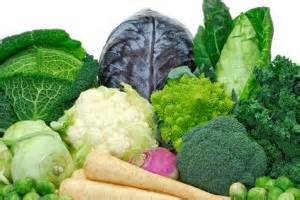
The highest concentrations of glucosinolates are found in fresh cruciferous vegetables. Good sources include garden cress, mustard greens, Brussels sprouts, collard greens, Asian radish, watercress, kale, savoy cabbage, red cabbage and broccoli. These vegetables contain a variety of glucosinolates and in varying amounts. (17) (18)
To release the beneficial compounds, the cell walls of cruciferous vegetables must be damaged (i.e. cut, chopped or chewed). and processing at high temperatures such as boiling and baking significantly decreases the compounds available for absorption. (19)
References
- Nguyen CT, Gonzales FA, Jones PA. “Altered chromatin structure associated with methylation-induced gene silencing in cancer cells: correlation of accessibility, methylation, MeCP2 binding and acetylation.” Nucleic Acids Research. 2001;29(22):4598-4606. https://www.ncbi.nlm.nih.gov/pmc/articles/PMC92514/
- Weng JR, Tsai CH, Kulp SK, Chen CS. “Indole-3-carbinol as a chemopreventive and anti-cancer agent.” Cancer Letters. 2008;262:153–163. https://www.ncbi.nlm.nih.gov/pmc/articles/PMC2814317/
- Watson GW, Beaver LM, Williams DE, Dashwood RH, Ho E. “Phytochemicals from cruciferous vegetables, epigenetics, and prostate cancer prevention.” American Association of Pharmaceutical Scientists Journal. 2013;15:951–961. https://www.ncbi.nlm.nih.gov/pmc/articles/PMC3787240/
- Guerrero-Beltrán CE, Mukhopadhyay P, Horváth B, Rajesh M, Tapia E, García-Torres I, Pedraza-Chaverri J, Pacher P.l. “Sulforaphane, a natural constituent of broccoli, prevents cell death and inflammation in nephropathy.” Journal of Nutritional Biochemistry. 2012;23(5):494-500. https://www.ncbi.nlm.nih.gov/pmc/articles/PMC3179776/
- Murillo G, Mehta RG. “Cruciferous vegetables and cancer prevention.” Nutrition and Cancer. 2001;41:17–28. https://www.ncbi.nlm.nih.gov/pubmed/12094621]
- Chripkova M, Zigo F, Mojzis J. “Antiproliferative Effect of Indole Phytoalexins.” Molecules. 2016;21(12):1626. http://www.mdpi.com/1420-3049/21/12/1626]
- Milczarek M, Wiktorska K, Lubelska K, Śliwka L, Matosiuk D, Chilmonczyk Z. P-0184 • “Selective, synergic and additive interaction types between 5-Fluorouracil and 2-Oxohexyl Isothiocyanate after sequential treatment in colon cancer cell lines.” Annals of Oncology. 2014:25: ii70 https://academic.oup.com/annonc/article/25/suppl_2/ii70/157612/P-0184SELECTIVE-SYNERGIC-AND-ADDITIVE-INTERACTION}
- Rausch V, Liu L, Kallifatidis G, et al. “Synergistic activity of sorafenib and sulforaphane abolishes pancreatic cancer stem cell characteristics.” Cancer Research 2010;70: 5004–5013. http://cancerres.aacrjournals.org/content/70/12/5004.long]
- Kallifatidis G, Labsch S, Rausch V, et al. “Sulforaphane Increases Drug-mediated Cytotoxicity Toward Cancer Stem-like Cells of Pancreas and Prostate.” Molecular Therapy. 2011;19(1):188-195. https://www.ncbi.nlm.nih.gov/pmc/articles/PMC3017446/]
- Fowke, Jay H, “A dietary strategy to reduce breast cancer risk: Estrogen metabolism and Brassica vegetable consumption.” Doctoral Dissertations Available from Proquest. 2000; AAI9960751. https://scholarworks.umass.edu/dissertations/AAI9960751
- Fowke JH, Longcope C, Hebert JR. “Brassica vegetable consumption shifts estrogen metabolism in healthy postmenopausal women.” Cancer Epidemiol Biomarkers Prev. 2000;9(8):773-779. https://cebp.aacrjournals.org/content/9/8/773.long
- Integrative Medicine Updates – UW Health. “Breast cancer risk and 2/16 hydroxyestrone ratio.” IG14669-0408P https://www.uwhealth.org/files/uwhealth/docs/pdf/IM_Vol2_No1.pdf
- Nijhoff WA, Grubben MJ, Nagengast FM, et al. “Effects of consumption of Brussels sprouts on intestinal and lymphocytic glutathione S-transferases in humans.” Carcinogenesis. 1995;16:2125–2128. https://www.ncbi.nlm.nih.gov/pubmed/7554064]
- Meyer UA. “Overview of enzymes of drug metabolism .”Journal of Pharmacokinetics and Pharmacodynamics. 1996;24(5):449–459. https://www.ncbi.nlm.nih.gov/pubmed/7554064]
- Zhang Y. “The molecular basis that unifies the metabolism, cellular uptake and chemopreventive activities of dietary isothiocyanates.” Carcinogenesis. 2012;33(1):2-9. https://www.ncbi.nlm.nih.gov/pmc/articles/PMC3276327/]
- Hecht SS. “Chemoprevention of cancer by isothiocyanates, modifiers of carcinogen metabolism.” Journal of Nutrition. 1999;129:768S–774S. https://academic.oup.com/jn/article/129/3/768S/4722180
- McNaughton SA, Marks GC. “Development of a food composition database for the estimation of dietary intakes of glucosinolates, the biologically active constituents of cruciferous vegetables.” British Journal of Nutrition. 2003;90(3):687-697. https://ucanr.edu/datastoreFiles/608-438.pdf
- Ishida M, Hara M, Fukino N, Kakizaki T, Morimitsu Y. “Glucosinolate metabolism, functionality and breeding for the improvement of Brassicaceae vegetables.” Breeding Science. 2014;64(1):48–59. doi:10.1270/jsbbs.64.48 https://www.ncbi.nlm.nih.gov/pmc/articles/PMC4031110/
- Vermeulen M., Ineke W. A. A. Klöpping-Ketelaars, Robin van den Berg, and Wouter H. J. Vaes “Bioavailability and Kinetics of Sulforaphane in Humans after Consumption of Cooked versus Raw Broccoli” Journal of Agricultural and Food Chemistry 2008;56(22): 10505-10509 https://pubs.acs.org/doi/10.1021/jf801989e
 Wendy’s Wellness Connection