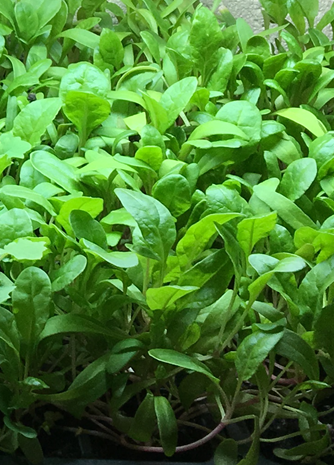
You may have learned about chlorophyll when you were a child in science class. Chlorophyll is a pigment that gives plants and algae their green colour. Plants use it to capture sunlight and convert it into energy, a process called photosynthesis.
Chlorophyll is being studied for its ability to reduce colonic DNA damage and colon cancer in people who eat red meat, The study’s premise is that dietary chlorophyll in green leafy vegetables may bind and stabilize heme iron to reduce DNA damage in the colon. (1)
From a detoxification perspective, animal studies indicate chlorophyll can bind with various chemicals known or suspected to cause cancer such as some polycyclic aromatic hydrocarbons (released from burning coal, oil, gasoline, trash and tobacco), heterocyclic amines (created from grilled foods) and aflatoxin (a toxin associated with liver cancer, arising from molds in foods such as peanuts and corn). In animal studies the binding of chlorophyll to these potential carcinogens interfered with their absorption in the gut. (2, 3)
Typically plants that contain the most chlorophyll are darkest in colour but there are a few exceptions. Broccoli and asparagus, while both green in their exterior colour, are light coloured in the interior and contain small amounts of chlorophyll. Excellent sources of chlorophyll include wheatgrass, spinach, parsley, arugula and garden cress. (4)
Chlorophyll breaks down in varying amounts when a vegetable is cut, defrosted, steamed, boiled or cooked. (5) It’s for this reason that I consume my chlorophyll through vegetables sources in salads, smoothies and vegetable juices.
References
- Frugé, Andrew D.; Smith, Kristen S.; Riviere, Aaron J.; Demark-Wahnefried, Wendy; Arthur, Anna E.; Murrah, William M.; Morrow, Casey D.; Arnold, Robert D.; Braxton-Lloyd, Kimberly. 2019. “Primary Outcomes of a Randomized Controlled Crossover Trial to Explore the Effects of a High Chlorophyll Dietary Intervention to Reduce Colon Cancer Risk in Adults: The Meat and Three Greens (M3G) Feasibility Trial.” Nutrients 11, no. 10: 2349. https://doi.org/10.3390/nu11102349
- Dashwood, R.”Chlorophylls as anticarcinogens (review)”. International Journal of Oncology 10, no. 4 (1997): 721-727. https://doi.org/10.3892/ijo.10.4.721
- Egner, P A et al. “Chlorophyllin intervention reduces aflatoxin-DNA adducts in individuals at high risk for liver cancer.” Proceedings of the National Academy of Sciences of the United States of America vol. 98,25 (2001): 14601-6. https://doi.org/10.1073/pnas.251536898
- Bohn, T. , Walczyk, T. , Leisibach, S. and Hurrell, R. (2004), Chlorophyll‐bound Magnesium in Commonly Consumed Vegetables and Fruits: Relevance to Magnesium Nutrition. Journal of Food Science, 69: S347-S350. https://doi.org/10.1111/j.1365-2621.2004.tb09947.x
- WHFoods. How do cooking and handling affect the chlorophyll in food? http://www.whfoods.com/genpage.php?tname=george&dbid=433
 Wendy’s Wellness Connection